Every single timeless marketing principle in today’s world, from the hooks in user-generated content videos to the copy in your email sequences, all have roots in direct-response copywriting. If you’re new to the concept, here’s what direct-response copywriting really means. It’s all about writing copy that gets people to take action right now, whether that’s clicking a button, making a purchase, or signing up for your list.
In this article, I’ll walk you through 10 of the most important direct-response copywriting books ever written. Each one teaches proven value lessons that you can apply to your marketing today.
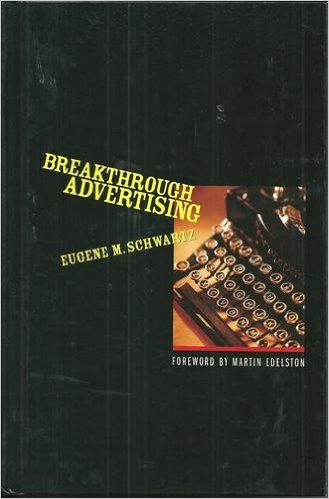
Breakthrough Advertising – Eugene Schwartz.
Eugene Schwartz’s Breakthrough Advertising is the definitive guide to understanding market sophistication and customer awareness. Instead of creating demand, Schwartz teaches you to tap into desires already present in your audience’s mind. He breaks down the five stages of market awareness, from unaware to most aware, and shows how to tailor your message to each stage. The book reveals why people buy and how copy bridges emotion to logic through alignment, not manipulation.
The key is matching your message to where your reader is in their buying journey. If they’re unaware of the problem, you need to educate them first. If they already know your product exists, focus on what makes you different. You can see how these awareness levels play out in our direct-response copywriting examples, where the same product gets positioned completely differently depending on the audience’s stage.
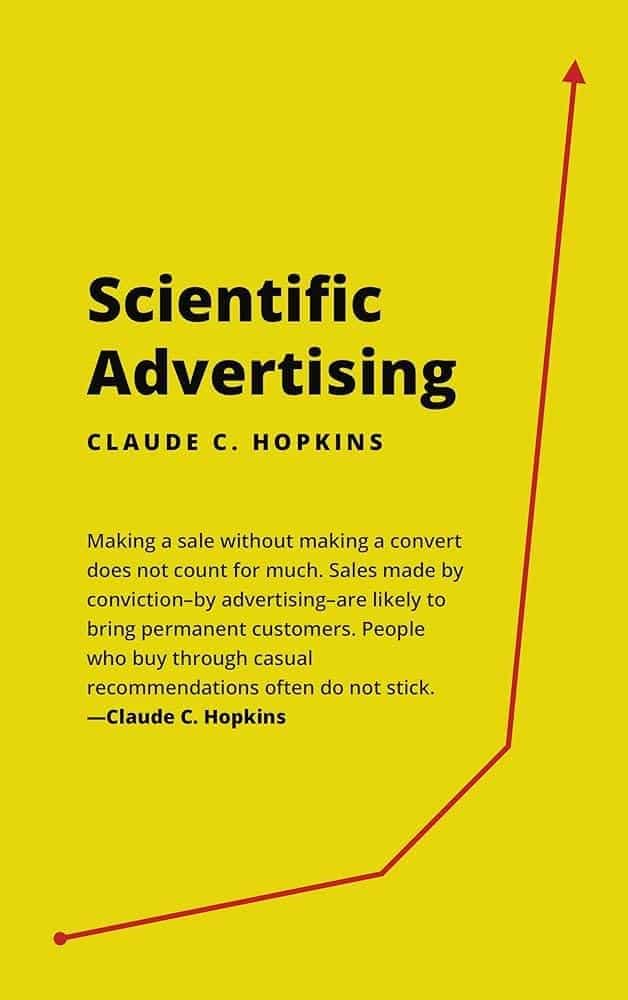
Scientific Advertising – Claude Hopkins.
Claude Hopkins pioneered the idea that advertising is measurable science, not creative guesswork. Written over a century ago, Scientific Advertising introduced concepts like split testing, sampling, and ‘reason why’ copy principles that form the backbone of modern performance marketing. Hopkins insisted that good advertising sells products by respecting the reader’s intelligence and must be tested, tracked, and improved through data.
Today, you can use data the way Hopkins used coupons to measure every ad’s return. Track your click-through rates, conversion rates, and cost per acquisition religiously. Test different headlines, offers, and creative variants against each other. The beauty of digital marketing is that Hopkins’ philosophy is easier to execute than ever. Let the numbers guide your decisions, not your gut feelings or personal preferences.
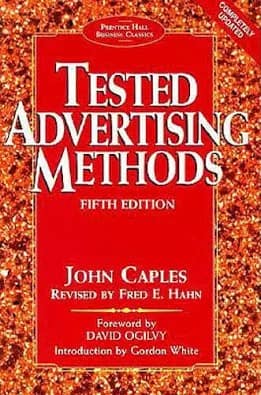
Tested Advertising Methods – John Caples.
John Caples spent decades running controlled experiments to discover what actually works in advertising. Advertising Methods reveals how to write headlines that grab attention, promise value, and spark emotion, all grounded in Caples’ decades of real-world testing. Caples found that clarity and curiosity consistently beat cleverness and proved that the difference between a good ad and a great one can triple your results.
His headline techniques translate perfectly to modern Meta ad hooks and landing pages. Instead of trying to be witty, lead with curiosity (“The secret everyone’s talking about…”) or specificity and curiosity (“How I gained 10,000 followers in 30 days without spending a dollar”). Caples showed that small changes in wording can produce massive differences in performance, and that’s still true on Facebook, Instagram, and TikTok today.
The Robert Collier Letter Book – Robert Collier.
The Robert Collier Letter Book is a collection of real sales letters that demonstrate how empathy, storytelling, and human understanding drive persuasion. Collier shows how to connect emotion to offer, structure letters for momentum, and speak directly to one reader, not a faceless crowd. Every page reminds you that effective sales writing is personal, emotional, and relentlessly focused on the reader’s self-interest.
This approach is the foundation of how you write emails today. Instead of blasting generic promotions, write as if you’re sending a letter to one specific person. Start with “you” language that acknowledges where they are right now. Reference their current situation or the pain point keeping them up at night. Write the way you’d talk to a friend over coffee, warm, direct, honest, not like you’re shouting at a stadium full of strangers. When your subscribers feel like you’re talking directly to them, they respond.
The Boron Letters – Gary Halbert.
Written from prison to his son Bond, Gary Halbert’s The Boron Letters distill decades of direct-response wisdom into simple, actionable lessons. With raw honesty and conversational tone, Halbert explains list building, offers, headlines, and the psychology of attention. He stresses writing like you talk – clear, personal, and human -while focusing on the audience and offer above all else. Beyond tactics, these letters reveal Halbert’s mindset about discipline, curiosity, and constant testing.
Halbert’s raw, conversational style is perfect for UGC scripts and short-form video hooks. Write the way real people actually speak, no corporate jargon, no stuffiness. Open your TikToks or Reels with “Here’s what nobody tells you about…” or “I tried this for 30 days and here’s what happened…” That authenticity Halbert championed in direct mail translates beautifully to social video, where polished corporate-speak gets scrolled past instantly. People want to hear from humans, not brands reading scripts.
The Adweek Copywriting Handbook – Joseph Sugarman.
Joseph Sugarman believed that every sentence in your copy should do one job. His signature concept – the “slippery slide” – describes how each sentence should pull the reader naturally into the next. The Adweek Copywriting Handbook covers techniques for headlines, body copy, and emotional triggers, emphasising trust and story over hype. Sugarman blends clear instruction with examples from his legendary ads, turning abstract ideas into practical systems.
Think of Sugarman’s slippery slide when writing product detail pages. Your headline creates curiosity. The first sentence delivers on that curiosity while opening a new loop. Each paragraph builds momentum, sentence by sentence, pulling the reader deeper into the story. Use short paragraphs, smooth transitions, and emotional beats that make it impossible to stop reading until they hit “Add to Cart.” That’s how you turn browsers into buyers through irresistible flow and pacing.
Ogilvy on Advertising – David Ogilvy.
David Ogilvy was one of the most celebrated advertising minds of the 20th century. In Ogilvy on Advertising, he shares the lessons that made him legendary. The book is part memoir, part how-to guide, teaching you to write persuasive headlines, use visuals that sell, and build brands people buy from. Ogilvy championed research, respected his audience’s intelligence, and insisted that creativity should drive sales, not feed egos. His famous case studies, from Rolls-Royce to Dove, prove that smart ideas rooted in research beat flashy gimmicks every time.
What Ogilvy understood is that you don’t have to choose between brand storytelling and direct response. You can do both. Study your audience deeply. Write headlines that inform and hook at the same time. Create beautiful, memorable ads, but always include a clear offer and tell people exactly what to do next. The best advertising respects the reader’s intelligence while making the path to purchase crystal clear.
How to Write a Good Advertisement – Victor Schwab.
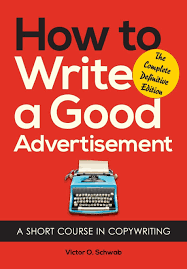
Victor Schwab turns decades of ad-testing experience into a practical step-by-step system for creating effective copy. In How to Write a Good Advertisement, Schwab broke down advertising into a simple, repeatable structure. He showed how to grab attention, build interest, prove your claims, and move readers to act – the same AIDA formula that still dominates performance marketing. His insistence on testing headlines and adding proof reshaped how copywriters measure success.
Many of today’s best-known frameworks trace directly back to Schwab’s structure, proving how foundational his work remains. It’s one of the essential copywriting books for beginners because it teaches the fundamentals without overwhelming you. Start with a headline that stops the scroll. Build interest by talking about benefits, not features. Create desire through storytelling or showing the transformation. Inspire conviction with testimonials, guarantees, or proof. Then drive action with a clear, specific CTA that tells people exactly what to do next. Schwab’s structure inspired many modern copywriting frameworks used in performance marketing today.
Great Leads – Michael Masterson & John Forde.
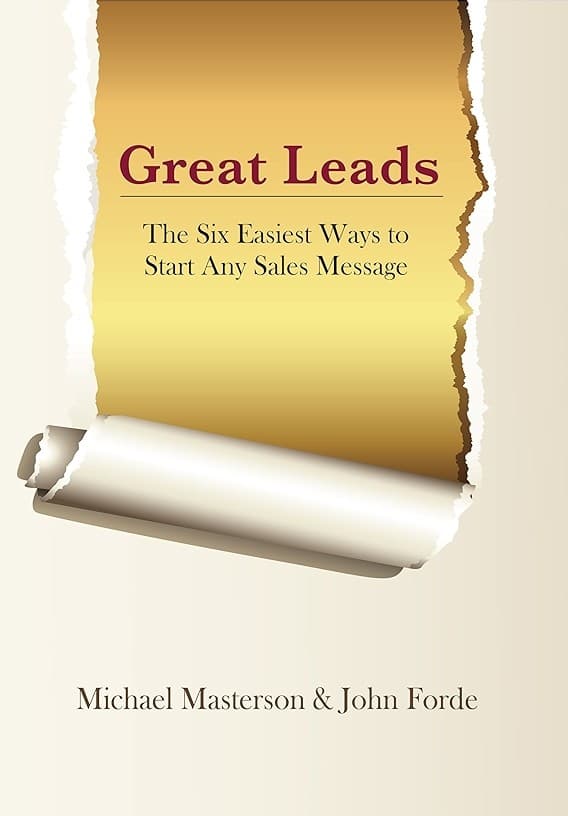
Masterson and Forde reveal that the most important part of any sales message is its opening, the lead. Great Leads outlines six proven types of leads, from the “direct” to the “story” lead, and explains when each works best depending on audience awareness. The book teaches how to hook attention, frame benefits, and transition seamlessly into your offer without forcing the sale. It transforms copywriting from guesswork into a repeatable process.
The magic happens when you choose your angle before you write a single word. Writing to an audience that already knows and loves you? Use a direct lead that just states the offer. Dealing with sceptics? A story lead that builds credibility and trust works better. Targeting people who don’t even know they have a problem? Lead with the problem itself, agitate it, then present your solution. Understanding which type of lead to use completely changes how you write everything that follows and dramatically improves your results.
Influence – Robert Cialdini.
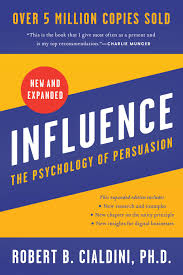
Robert Cialdini’s Influence explores the six universal principles of persuasion: reciprocity, commitment and consistency, social proof, liking, authority, and scarcity. Drawing on decades of psychological research, Cialdini explains how these triggers shape human behavior and how marketers can ethically apply them. His stories show how small cues can dramatically increase compliance, trust, and engagement. Understanding these principles gives copywriters a science-based framework for persuasion.
These principles should be woven throughout your entire sales funnel. Add expert endorsements and credentials to establish authority. Show customer reviews, ratings, and “bestseller” badges to leverage social proof. Use countdown timers or limited inventory notices to create genuine scarcity. Offer a valuable free resource before asking for the sale. When you use these triggers ethically and authentically, they naturally encourage people to say ‘yes’, because you’re working with human psychology rather than against it.
Conclusion.
These direct response copywriting books aren’t just theory, they all helped build the copywriting foundation valued today. They’re battle-tested blueprints from legends who built empires with words. Whether you’re just starting out and need the best copywriting books for beginners,this reading list will transform how you write.
The fastest way to learn direct response copywriting is simple: read these books, then apply what you learn straight away. Test headlines like Caples. Study your audience like Ogilvy. Write conversationally like Halbert. Each of these best copywriting books for marketers teaches you to write copy that doesn’t just sound good, it actually sells.
Ready to put these principles to work in your business? If you need copy that converts browsers into buyers and turns cold traffic into loyal customers, we’d be happy to help out. Get in touch with us for direct response copywriter services to create campaigns that drive results.